Carbon monoxide alarms: where to fit them, how to test them, when to replace them
Where carbon monoxide alarms belong, how often to test them, what the beeps mean, when the alarm itself needs replacing, and what to do the moment it sounds.
 By Hamish Crowther9 min read
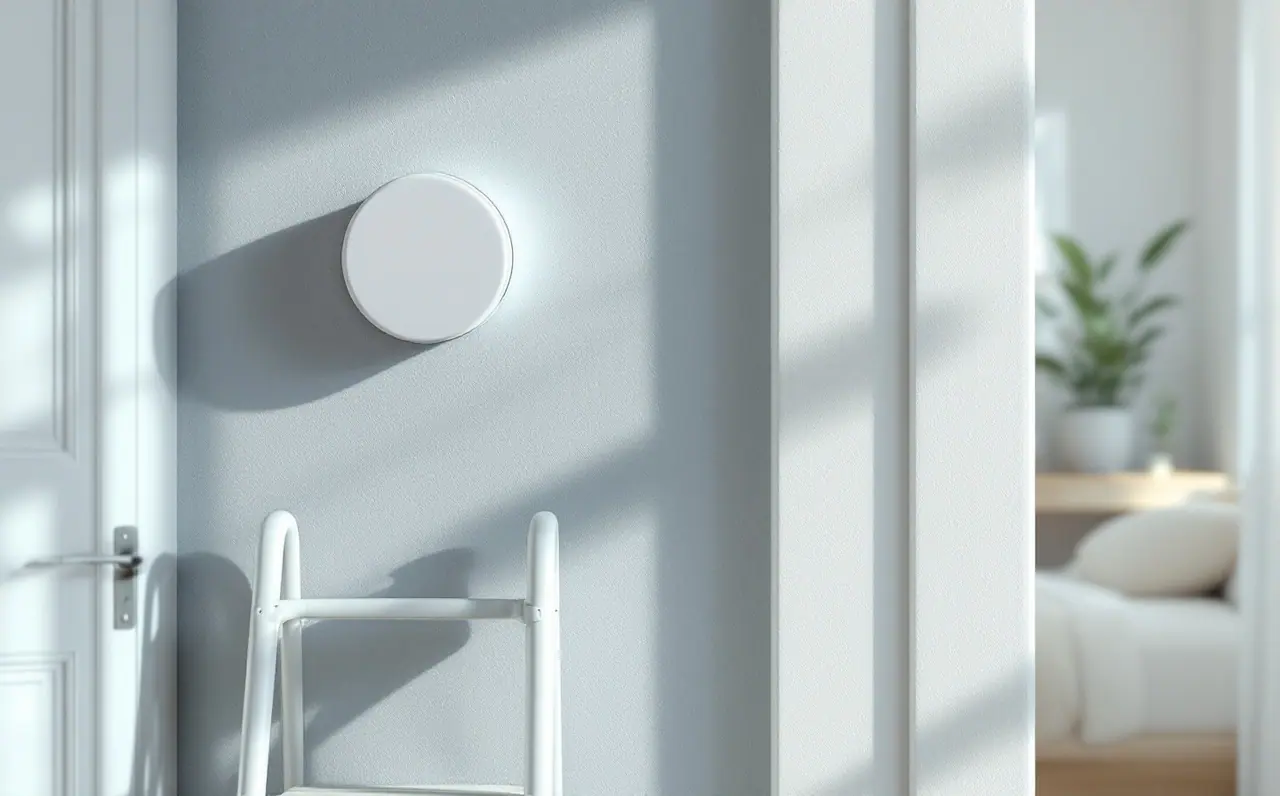
Carbon monoxide is the hazard in a house that gives no clue at all. You cannot see it, smell it or taste it. It comes from fuel that burns without enough air: a gas boiler or furnace with a blocked flue, a water heater that vents badly, a car left running in the garage, a generator in the wrong place, a charcoal grill brought indoors on a wet evening. The only household device that tells you it is there is a carbon monoxide alarm, and an alarm only helps if it is in the right place, working, and not past its sell-by date.
I have fitted a fair few of these over the years, in my own homes and for family. What follows is the routine I use, checked against what the official bodies say. The maker's instructions for your particular alarm come first, and local building or rental rules can add to what is here.
Does your home need one?
If anything in or attached to your home burns fuel, the answer is yes. That includes:
- gas, oil, coal or wood boilers, furnaces and space heaters
- gas or oil water heaters
- gas clothes dryers
- gas ranges and ovens
- fireplaces and wood or multi-fuel stoves
- an attached garage, because of the car, the mower and any fuel-powered tool
- a portable generator you may use in a power outage
Homes with all-electric heating and cooking still benefit if there is an attached garage, or a neighbor's flue close to a window in a shared building.
Where to fit them
The US National Fire Protection Association (NFPA) tells households to put CO alarms outside each separate sleeping area and on every level of the home, and to follow the manufacturer's instructions for placement and mounting. Some building codes and some makers also ask for an alarm inside a bedroom, for example where a fuel-burning appliance shares or adjoins the room, so read your local rules too. The US Consumer Product Safety Commission gives the same core advice: an alarm on every level of the home and outside sleeping areas. The CDC puts it more briefly, as near every sleeping area.
That covers the minimum. Here is how I translate it in a typical two-story house with a basement:
| Location | Why |
|---|---|
| Hallway outside the bedrooms | Loud enough to wake sleepers behind closed doors |
| Inside a bedroom | Where local codes or the maker ask for it, often when a fuel-burning appliance is close by |
| Main living level | Every level needs one |
| Basement, especially near the furnace or water heater area (but not right next to it) | Every level, including the basement |
| Room above or beside an attached garage | Fumes from a running engine can seep through |
In England, rented homes have a legal minimum of their own. Since 1 October 2022, landlords must make sure there is a CO alarm in any room used as living accommodation that contains a fixed combustion appliance, such as a gas boiler or a wood stove, though gas cookers are excluded. UK government guidance says that in general an alarm should sit at head height, on a wall or shelf, about 1 to 3 meters from a potential source, and that the manufacturer's instructions should be followed. Rules differ in Scotland, Wales and Northern Ireland, and between US states and Canadian provinces, so check your own local requirements.
Places to avoid
Manufacturers' leaflets often list spots that can cause false alarms or slow detection. They typically include right beside or above a cooking appliance, in very humid rooms such as a bathroom, near vents or fans that blow air across the alarm, behind curtains or furniture, and in a garage itself, where exhaust from starting a car can set it off. Your alarm's leaflet is the authority here, so keep it.
Battery, plug-in or hardwired
CO alarms come in a few power types, and each has a place.
- Battery alarms go anywhere and keep working in a power outage. Some take replaceable batteries; others have a sealed battery meant to last the life of the alarm.
- Plug-in alarms sit in a socket, which is handy near a bedroom but can put the alarm lower than the maker recommends. Look for one with a battery backup.
- Hardwired alarms are wired into the home's electrical system by an electrician, usually with a battery backup.
Both the CDC and CPSC advise battery-operated alarms or alarms with battery backup, so the alarm keeps working when the power goes off, which is precisely when people bring out heaters and generators.
Interconnected alarms
NFPA and CPSC both say interconnected alarms are best: when one sounds, they all sound. In a larger house, or one where people sleep on different floors, that matters. Interconnection can be wired or wireless, and some combined smoke and CO alarms link to each other too. If you use combination smoke and CO alarms, NFPA says to follow the directions for smoke alarm installation.
A CO alarm is not a smoke alarm, and a smoke alarm does not detect carbon monoxide. NFPA is clear that one is no substitute for the other. Unless a unit says it does both, you need both.
Testing and maintenance
NFPA's advice is to test CO alarms at least once a month and to replace any alarm that fails to respond. The CDC suggests checking batteries when the clocks change in spring and fall. I keep a simple schedule taped inside the cupboard where the step stool lives:
| When | What |
|---|---|
| Monthly | Press and hold the test button on every alarm until it sounds. Check interconnected alarms all sound together. |
| Spring and fall clock changes | Check or replace replaceable batteries. Vacuum or wipe the vents only as the manufacturer's instructions describe. |
| Once a year | Read the "replace by" date on the back of each alarm. Have fuel-burning appliances, flues and chimneys checked by a qualified technician, as both the CDC and NFPA recommend. |
| When moving in | Test every alarm, note the dates, and replace any with no date or a past date. |
One worked example from a typical hallway alarm: take it off its bracket and look at the back. You will usually find a manufacture date, sometimes a "replace by" date, and a short guide to the alarm's sounds. Write the replacement year on the front with a marker if it is hard to read, so nobody has to unclip it next time.
What the beeps mean
Alarms use different sounds for different things, and the patterns vary between makers, so learn your own. In general:
- a loud repeating pattern is the CO alarm itself
- a single chirp every so often usually means a low battery
- a different chirp pattern, often described in the leaflet as end of life, means the sensor has reached the end of its working life
NFPA's advice is to know the difference. If the low-battery signal sounds, replace the batteries or the device. If the alarm still sounds after that, treat it as a real alarm.
When to replace the alarm
CO sensors wear out. NFPA says the sensors have a limited life and that alarms should be replaced according to the manufacturer's instructions or when the end-of-life signal sounds. The CDC says to replace them following the manufacturer's instructions or every five years. Many alarms have a "replace by" date printed on them, and many sound an end-of-life warning when the time comes. A new battery will not fix an alarm whose sensor has expired.
When you replace one, put the date on it, keep the leaflet in a kitchen drawer with the others, and test it the same day.
If the alarm sounds
Do not go looking for the source. Get everyone, including pets, out of the house into fresh air straight away. Then call the emergency number from outside: 911 in the US and Canada, 999 in the UK, 112 across the EU. NFPA adds that you should stay outside until emergency personnel say it is safe to go back in. If anyone is unconscious, having trouble breathing or having a seizure, say so at once on the call.
If you are worried that someone breathed in fumes from any product or appliance and they are now outside and alert, you can call a poison center for advice: Poison Help at 1-800-222-1222 in the US, or NHS 111 in the UK. Our official help page lists these contacts. When an alarm is sounding, though, the emergency number comes first.
Habits that keep CO from building up
An alarm is the backstop. The everyday habits matter as much:
- Never run a car or truck in an attached garage, even with the garage door open, as the CDC puts it. Back it out before you let it idle.
- Never use a portable generator inside the home or garage, even with doors and windows open. The CDC says to run it outdoors more than 20 feet from windows, doors and vents.
- Never use a charcoal grill, camp stove or other outdoor appliance indoors or in a garage.
- Never use a gas oven or range to heat a room. NFPA points out that ovens and stoves are not designed to heat a home.
- Keep flues, vents and outside exhaust openings clear of snow and debris.
- Have heating systems, water heaters and other gas, oil or coal appliances serviced every year by a qualified technician, and chimneys checked too.
The CDC's carbon monoxide basics page covers these points, and CPSC's carbon monoxide information center adds detail on generators and alarms.
Choosing an alarm
Without naming brands, a few things are worth looking for when you choose a CO alarm, whether for a first fitting or a replacement.
- A recognized listing or standard mark. NFPA advises choosing a CO alarm listed by a nationally recognized testing laboratory, which means it has been tested to meet safety standards. In the UK, government guidance for landlords refers to alarms complying with the British Standard for CO alarms, numbered 50291.
- The right power type for the spot. A sealed long-life battery alarm suits a bedroom or a rented home where you cannot drill for wiring. A hardwired alarm with battery backup suits a renovation.
- Interconnection if you have more than one level or sleep far apart.
- A clear end-of-life warning and a printed replacement date.
- A digital display, if you want one. The CDC suggests considering an alarm with a digital readout, which can show the highest level recorded as well as sounding.
- A loud, distinct sound that everyone in the house will recognize, and an alarm with a visual signal if anyone in the house has hearing loss.
Our safety shelf collects the kinds of alarms, locks and storage that this site writes about. NFPA also suggests taking a travel CO alarm with you when you travel.
One more thing on the same shelf
When you buy a new alarm, look at what powers it. Some small alarms and accessories use coin cells, and spares end up in the same drawer as the alarm leaflets. Our piece on button batteries at home explains how to store and dispose of those so they do not become a different hazard. Then put the test day in your calendar, and press the button once a month.

Hamish Crowther
Hamish has spent decades in garages and garden sheds, his own and other people's. He writes about fuels, car-care fluids, paints, carbon monoxide alarms and the batteries hiding in everyday things.