Safety gifts for the home: what to check on the box first
Alarms, cabinet latches, lockable boxes and safety glasses make useful gifts. Which marks, dates and details to look for on the box, and how to spot a dud listing.
 By Hamish Crowther7 min read
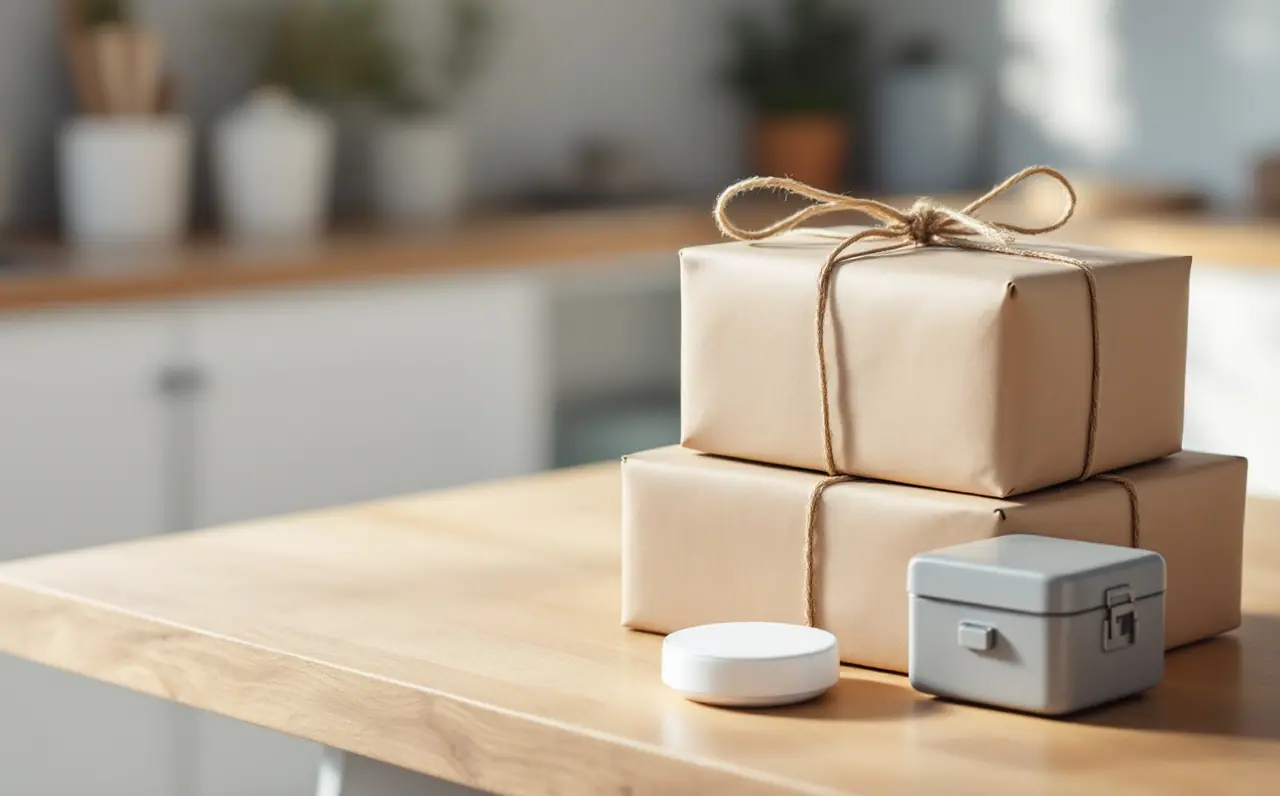
Every winter somebody in my family asks what to give the person who has everything, and every winter I suggest something that goes on a wall or inside a cupboard. A carbon monoxide alarm for a son who has just moved into his first rented flat. A set of cabinet latches for a niece with a baby who has started to crawl. Safety glasses for the brother-in-law who sands and strips furniture in his garage. Nobody gasps when they open these, but they get used for years. The trick is to read the box properly, and to compare the same model in a few places before you pay. A barcode-matched comparison site such as BestPriceScanner shows what one exact item, identified by its UPC, is selling for at several large stores, which also makes a listing far below the usual figure easy to spot.
That last point matters more for safety gear than for most gifts. A cheap copy of a scarf is a disappointment. A cheap copy of an alarm is a box on the wall that may stay silent. So this piece is about what to look for on the packaging and the listing, item by item.
Why the box matters more than the brand
Safety products are tested against published standards, and the box is where the maker tells you which ones. A known brand name is a reasonable start, but counterfeit and unbranded alarms have turned up for sale through online marketplaces, and consumer groups in the UK have reported cheap carbon monoxide alarms that failed to sound when tested. The marks, the dates and the maker's details are what separate a real product from a lookalike.
Three things to find on almost any safety item:
- the standard it is listed or certified to, printed on the box or the device
- a manufacture date, or a "replace by" date
- the full name and address of the maker or importer, not just a web address
If a listing will not show you the back of the box, or the photos are of a different product, keep looking.
Carbon monoxide alarms
This is the gift I give most, and the one where the box tells you the most.
In the US, look for an alarm certified to the current UL 2034 standard. The EPA's page on carbon monoxide detectors names that standard, or the older IAS 6-96 standard, as the mark to check before you install one. In the UK and Europe, CO alarms are made to EN 50291, which appears on the packaging as BS EN 50291 in the UK.
Then check the dates. The sensor inside a CO alarm wears out. Most alarms have a working life of 7 to 10 years, printed on the box or the back of the unit, and many sound an end-of-life warning when the time is up. The clock usually starts at manufacture, not when you take it out of the wrapping, so an alarm that has sat in a warehouse for three years has given away three years of its life before it reaches a wall. Pick the freshest date you can find.
Finally, the power type. A sealed battery that lasts the life of the alarm suits a renter or an older relative who will not be climbing a step stool to change batteries. A plug-in model should have a battery backup, because power cuts are when people bring out heaters and generators. Our guide to carbon monoxide alarm placement explains where each type belongs once it is unwrapped.
Smoke alarms
A smoke alarm is a fine companion gift, or a combined smoke and CO unit where the layout of the home suits one. In the US, look for a listing to UL 217. In the UK and Europe, the standard for domestic smoke alarms is EN 14604. As with CO alarms, check the date and the power type, and remember that smoke alarms also have a limited life, usually printed on the unit.
Cabinet latches and locks
There is no single mark to hunt for here, so the box needs a different kind of reading. Look at:
- How it fits. Adhesive latches suit rented homes but need a clean, flat surface and time to set. Screw-fitted latches hold better on doors that get yanked.
- Which doors it suits. Some latches only work on cupboards with a face frame, some only on frameless doors, and side-by-side knobs need a different style again. The box should say.
- Magnetic locks. These open with a magnetic key, and the key itself becomes the thing to keep high and out of sight.
- How many are in the pack. The cupboard under the sink is the obvious one, but laundry, bathroom and garage cupboards count too.
Rosemary's walk-through on childproofing the cupboard under the sink is worth passing on with the gift, because a latch only helps when the strongest products are moved up as well.
Lockable boxes for medicines and batteries
A small lockable box or cash-box style case is one of the most useful presents for grandparents who have grandchildren to stay. It takes handbag medicines, spare button batteries and the car keys that carry them. Look for a lid that closes and locks without a fight, a key or combination that an adult can manage with stiff fingers, and a size that fits the shelf it will live on. Our page on button batteries at home explains why the spares belong in there.
Safety glasses and gloves for the person with a workshop
For anyone who strips paint, uses solvents or mixes concrete, eye protection is the gift that matters most. In the US, safety eyewear that meets the ANSI Z87.1 standard is marked "Z87" on the frame. In Europe the eye protection standard is EN 166, also marked on the frame. Ordinary sunglasses and reading glasses are not a substitute.
Chemical-resistant gloves sold in Europe carry the EN ISO 374 marking, usually with a row of letters showing which test chemicals the glove was checked against. Match the glove to the job: a thin disposable glove for a quick wipe is not the glove for an afternoon with paint stripper. The product's own label will say what it needs.
A worked example: reading the back of an alarm box
Here is how I read a carbon monoxide alarm box on a shop shelf, line by line, using the kind of wording you will see:
| What the box says | What it tells you |
|---|---|
| "Certified to UL 2034" or "BS EN 50291" | Tested to the right standard for your country |
| "10-year sealed battery" | No battery changes for its working life |
| "Replace alarm 10 years after date of manufacture" | The life counts from the factory, so check the date |
| A manufacture date on the side or base | How much of that life is left |
| Maker's name and full postal address | Someone is responsible for the product |
| Digital display or peak level memory | Handy, not essential |
If the standard is missing, the date is missing and the only contact is a web address, I put it back.
Spotting a dud listing
When you compare prices, the outlier at the bottom of the list deserves the most suspicion. Warning signs include a price far below what the same model costs at the large stores, no certification mark in the photos, a brand name you cannot find anywhere else, and a description that calls a CO alarm a "gas detector" or mixes up smoke and carbon monoxide. Product recalls are another reason to stick to clearly identified models: in the US the CPSC publishes recalls, and in the UK the Office for Product Safety and Standards does the same.
Before the paper goes on
Put the instructions back in the box, and add a note with the date it should be replaced. If a carbon monoxide alarm ever sounds, the advice is the same for everyone: get everyone out into fresh air and call the emergency number from outside, 911 in the US and Canada, 999 in the UK, 112 across the EU. And if anyone may have swallowed a battery or swallowed, breathed in or splashed a household product, call your emergency number or a poison center now, with the packaging in hand. In the US, Poison Help is 1-800-222-1222; in the UK, call NHS 111, or 999 in an emergency. Our official help page lists where to find the rest.

Hamish Crowther
Hamish has spent decades in garages and garden sheds, his own and other people's. He writes about fuels, car-care fluids, paints, carbon monoxide alarms and the batteries hiding in everyday things.