When guests stay over: bags, toiletries and things left within reach
A guest's handbag on the floor can hold medicines, batteries and vape refills. A checklist for the spare room, the shared bathroom and the bag conversation.
 By Rosemary Tilson7 min read
You can spend months getting a home just right for a small child: latches on the low cupboards, cleaning products moved up, batteries put away. Then the grandparents arrive for a long weekend, or a friend stays over, and for a few days the house holds a whole new set of things that nobody has thought about. They come in handbags, wash bags, coat pockets and suitcases, and most of them end up at exactly the height where children and pets do their exploring.
None of this is about blaming guests. Most adults who do not live with small children simply do not think about where they put a bag down, and why would they? It is about a few minutes of planning before people arrive, one friendly conversation, and a quick look round before and after the visit. This piece is laid out as a checklist you can work through.
What tends to arrive with a guest
Before the checklist, it helps to picture what is actually in a typical overnight bag. Some of it is obvious, some is not.
- Medicines, in their packs, loose in a pill organizer or a twist of foil, or in a weekly box with the days printed on the lids.
- Hand sanitizer, which is mostly alcohol, and small bottles of perfume, aftershave or mouthwash.
- Spare button batteries for a hearing aid, watch or car key, or coin cells inside a key fob.
- E-cigarettes, vapes and bottles of e-liquid.
- Nail polish and remover, hair dye, hair spray and contact lens solutions.
- Chewing gum, mints and sweets, which matter for pets as well as children.
- Lighters and matches.
The US Consumer Product Safety Commission points out in its guide to locking up poisons that medicines swallowed by young children are often found where parents or grandparents have left them: in a purse, on a nightstand or in a pill container. The US National Capital Poison Center makes a similar point in its article on grandparents and child safety, noting that many of the prescription medicines children get into belong to grandparents.
Checklist: before guests arrive
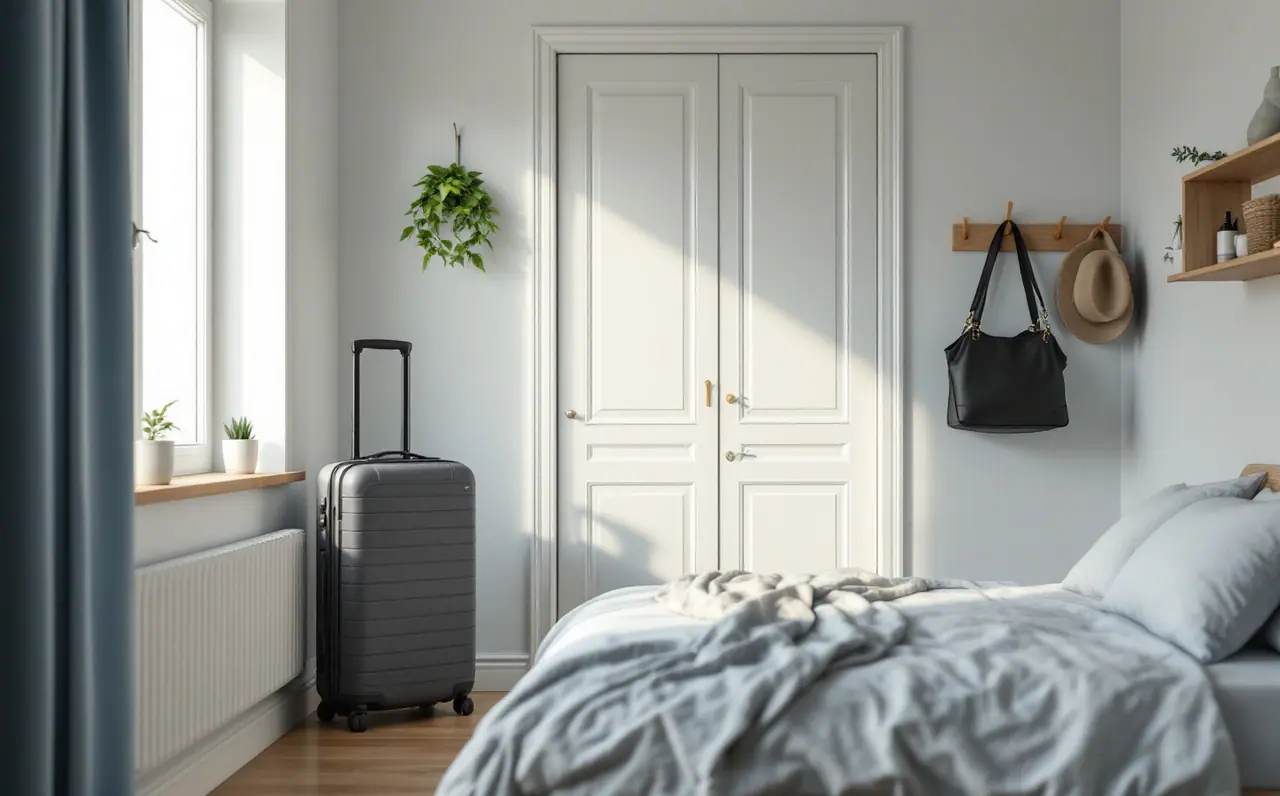
- Decide where bags will go. A high hook on the back of a door, the top of a wardrobe, a high shelf or a closed room that children do not enter. Clear it in advance so it is easy to use.
- Find a lockable box or a high cupboard where a guest can keep medicines and e-liquids if they want to. A simple lidded box on a top shelf is enough for most visits.
- Check the spare room at child height. Get down on your knees and look under the bed, behind the bedside table and into low drawers. Spare rooms often double as storage, and things like old paint, a sewing kit, a box of spare batteries or a bag of cleaning products tend to end up there.
- Check the bedside table itself. It is where guests put a glass of water, their medicines and their phone charger. If it is low and a child might wander in, plan another spot.
- Look at the bathroom they will use. Clear the bath edge and the low shelves, and make sure the cupboard under the basin still has its latch working.
- Put your own button batteries and spare cells away. A full house means drawers get opened that are normally left alone. Our guide to button batteries at home covers where they hide and how to store spares.
Checklist: the bag conversation
This is the step people find awkward, so keep it simple and practical. Most guests are glad to be told.
- Mention it when they arrive, before the bag goes down: something like "We have a little one who gets into everything. Would you mind putting your bag up on this hook?"
- Show them the high spot or the box you prepared, so they do not have to improvise.
- Ask about medicines directly but lightly. "If you have any tablets with you, the top shelf in your room is a good place for them."
- Ask the same about vapes and e-liquid refills. Some guests will not think of these as a hazard at all.
- Mention coats. Coat pockets on a hall peg at child height can hold the same things as a handbag.
- If the guest uses a daily pill organizer, suggest they keep it with their medicines on the high shelf rather than on the kitchen table. The CPSC guide advises adults to use child-resistant packaging wherever young children live or visit, and a weekly pill box is rarely child-resistant.
Checklist: e-cigarettes and e-liquids
E-liquid deserves its own section because it is often flavored and sold in small bottles that look harmless. The National Capital Poison Center explains that e-liquid contains concentrated nicotine and may be flavored to smell and taste like mint, chocolate, coffee or fruit, and that even a small taste can cause nicotine poisoning in a child.
- Ask guests who vape to keep devices, pods and refill bottles in their bag, with the bag up high, or in the box you set aside.
- Ask them not to refill a device in front of a child, and to close the bottle straight away afterwards.
- Ask them to keep refills in their original bottles. Liquid nicotine should never be poured into another container.
- Used pods and empty bottles can still contain nicotine, the same article warns, so wrap them and put them in a bin a child or pet cannot get into.
In the UK, rules on nicotine-containing products require them, or their packaging, to be child-resistant and tamper evident, and limit refill containers to 10ml, according to the UK government's guidance on e-cigarette regulations. Child-resistant is not childproof, though. A cap that is not fully closed protects nobody, and a determined child given enough time can sometimes work one open.
Checklist: the shared bathroom
- Toiletries go back in the wash bag, and the wash bag goes up high, ideally on a hook or a high shelf.
- Razors, nail polish remover, hair dye and mouthwash do not stay on the bath edge or the basin.
- The cupboard under the basin stays latched. Guests sometimes leave a latch open because they do not know how it works. Show them, or put a note on the inside of the door.
- Any cleaning products a guest brings stay in their own containers. A travel-sized spray of something unlabeled is a problem waiting to happen.
- The toilet lid goes down if you have a dog that drinks from it and any cleaning block is in the cistern.
Checklist: while they stay
- Do a quick sweep once a day, at child height, in the rooms the guests use: the living room floor beside their chair, the bedside table, the kitchen table.
- Watch for bags that drift back to the floor. It happens. A friendly reminder works better than a lecture.
- Keep an eye on gifts. Guests often bring presents, and some of them have batteries, small magnets or scented oils inside. Check battery compartments are screwed shut before a toy goes to a child.
- Remember pets. Sugar-free gum, medicines and hand sanitizer are as much of a concern for a dog as for a child. Our guide to pets and household chemicals walks through the rest of the house from a pet's point of view.
Checklist: when they leave
- Check the spare room again: under the bed, behind the bedside table, inside the drawers and in the bathroom cabinet. Tablets dropped on the floor and spare batteries left in a drawer are the classic leftovers.
- Check the car, if you gave anyone a lift. Bags slide, and things fall out of pockets onto the floor and into the back seat where children sit.
- Put the high box away again, or leave it ready for next time.
If you are the guest
Turn the checklist round when you are the visitor in a house with children or pets. Ask where to put your bag, keep medicines and e-liquids up high and closed, and never leave a pill box or a vape on a coffee table. If you are a grandparent with young grandchildren visiting you, the same list works in reverse in your own home: our guide to childproofing the cupboard under the sink is a good place to start.
If something is swallowed
If a child, a guest or anyone else may have swallowed, breathed in or splashed a product or a medicine, call your local emergency number or a poison center now, and have the pack, bottle or label with you when you call. In the US, Poison Help is 1-800-222-1222. In the UK, call NHS 111, or 999 in an emergency. In the EU, the emergency number is 112. If someone is unconscious, having trouble breathing or having a seizure, call 911, 999 or 112 straight away. For a pet, call your vet or an animal poison line. Contacts for other countries are on our official help page.
Do not wait to see whether symptoms appear, and keep the packaging, even if it looks empty. Knowing exactly what was in the bag is the most useful thing you can tell the person on the phone, which is one more reason to ask guests to keep everything in its own pack.

Rosemary Tilson
Rosemary has childproofed three family kitchens and one very determined toddler's bedroom. She writes the storage pieces here: latches, heights, cupboards and the habits that keep a bottle where it belongs.