
Pets and household chemicals: a room-by-room look
Dogs lick floors and cats walk across worktops. A room-by-room look at the cleaners, baits and drips pets find, and who to call if your pet gets into one.
 By Rosemary Tilson8 min read
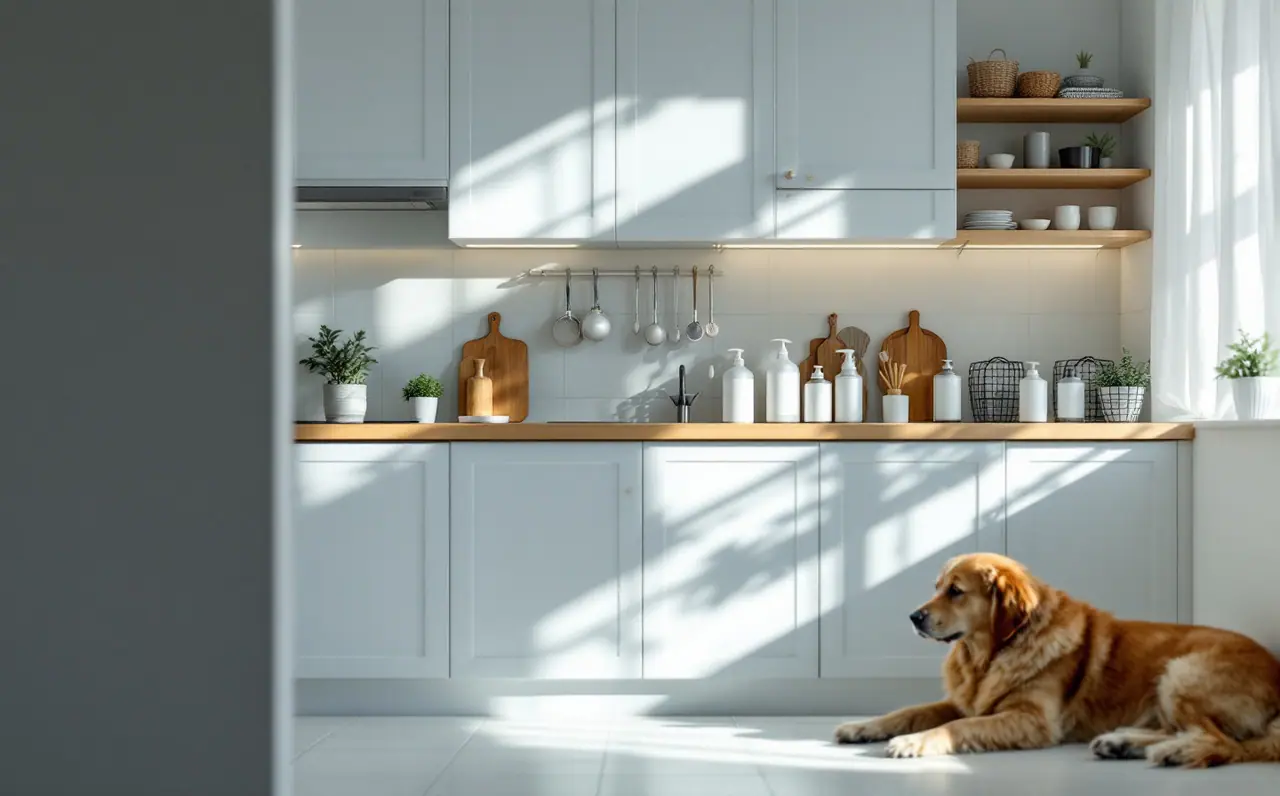
Children grow out of the crawling stage. Pets never do. A dog spends its whole life with its nose a few inches off the floor, and a cat goes everywhere a child cannot: along the worktop, onto the windowsill, behind the washing machine. Both of them lick their paws and fur, which means anything they walk through can end up swallowed later. Childproofing a home helps pets too, but it does not cover everything, because pets reach different places in different ways.
This piece walks through the house room by room, looking at the products that most often meet a curious pet, and the storage habits that keep them apart. It does not tell you how to treat a pet. That is a job for your vet or an animal poison line, and there is a section at the end on who to call.
Before the walk-through: three habits that cover most rooms
- Store products where pets cannot get at them, not just where children cannot. A high shelf stops a dog but may not stop a cat. A closed cupboard with a latch stops both. The ASPCA, in its guidance on corrosive household products and pets, advises secure cabinets that pets cannot get into and never leaving products unattended where pets may investigate.
- Keep pets out of a room while you clean it, and let them back in only once treated surfaces are dry, as the same ASPCA guidance advises. Follow the label's own directions too: some products say how long to keep people and animals away.
- Clean spills straight away. A drip of a sweet-tasting product or a scatter of granules is an invitation for a dog.
The kitchen
The kitchen holds the most products and the most pet traffic, because that is where the food is.
Floor cleaners and sprays
A freshly mopped floor is the classic pet exposure: the dog walks across it, then licks its paws. Shut the dog or cat in another room while you mop, ventilate, and wait until the floor is fully dry before opening the door. Use the amount the label directs, because more product does not mean cleaner, and it leaves more residue for paws.
Sprays deserve the same care on worktops. Cats jump up onto surfaces that you may have just wiped, so wipe or rinse as the label says and let the surface dry before the cat has a chance to walk on it.
Dishwasher tablets and washing-up liquid
Dishwasher tablets and capsules are small, smell of something, and come in tubs or bags that a determined dog can chew through. Keep them in a closed cupboard above counter height, close the tub every time, and do not leave a tablet sitting in the dishwasher door with the door open. Close the dishwasher door between loads, too. Some dogs like to lick the plates.
The cupboard under the sink
Many dogs learn to nose open a low cupboard door, and some learn to pull it with a paw. A child-safety latch helps here as well. Better still, move the strongest products, such as bleach, oven cleaner and drain opener, to a high closed cupboard, and keep only the mildest everyday items down low behind the latch.
The utility room and laundry area
Laundry products are among the household items the ASPCA lists as a concern for pets, including liquid detergent, detergent pods, fabric softeners and dryer sheets. Its corrosive products article explains that fabric softeners and dryer sheets contain cationic detergents.
- Keep detergent, capsules and softener on a high shelf or in a closed cupboard, lids shut.
- Put used dryer sheets straight into a closed bin. A sheet on the floor is a chew toy as far as some dogs are concerned.
- Do not leave a bucket of cleaning water on the floor. Dogs drink from buckets.
- Watch the washing machine and tumble dryer drum. Cats like warm, enclosed spaces, so check before you close the door and start a cycle.
The bathroom
Toilet bowl cleaners and in-cistern blocks are a reason to keep the toilet lid down if your dog drinks from the bowl. The US Food and Drug Administration's page on household items that can be dangerous to pets names household cleaners including bleach and toilet bowl cleaners among its non-edible dangers.
Keep bleach, limescale remover and mold sprays in a closed cupboard. Close the bathroom door while a product is working on the bath or shower, and rinse as the label directs before a cat goes in and walks along the edge of the tub.
Medicines, both human and pet, belong in a high closed cabinet too. A dropped pill on a bathroom floor rarely stays there long with a dog in the house.
The living room and bedrooms
Air fresheners, diffusers and potpourri
The ASPCA lists liquid potpourri and some diffuser liquids alongside fabric softeners as products containing cationic detergents, and notes that most diffuser liquids and potpourri also contain fragrances, alcohol or essential oils. It advises keeping these in cabinets pets cannot open. Practical steps:
- Place reed diffusers and plug-in refills where a cat cannot knock them over or brush against them. A cat that gets liquid on its fur will groom it off.
- Do not leave bottles of diffuser oil or refill liquid on a shelf a cat can reach.
- If you live with a cat, a bird or another small animal, ask your vet before using an essential oil diffuser or a strong air freshener in a room the animal uses. The ASPCA notes that birds in particular are very sensitive to fumes from cleaning products, and recommends veterinary advice before using cleaning products around them.
Bags, pockets and bedside tables
Handbags and backpacks on the floor hold hand sanitizer, medicines, chewing gum and batteries. Hang them up or put them on a high hook, especially when guests visit.
The garage and driveway
Antifreeze
Most automotive antifreeze is based on ethylene glycol. The US National Capital Poison Center describes it as colorless and odorless with a sweet taste, which makes it attractive to children and pets, and warns that spills can attract dogs and other animals. It advises keeping antifreeze in its original container, locked up and out of pets' reach, cleaning up leaks right away, and notes that some products use propylene glycol, which it describes as less dangerous if swallowed. Check your vehicle manual before switching.
Look under the car now and then for drips, and do not let a dog drink from puddles on a driveway or in a garage. Our piece on car-care products in the garage covers antifreeze, screenwash and brake fluid storage in more detail.
Ice melt, fuels, paints and solvents
The FDA list includes ice melting products, swimming pool chemicals, and paints and solvents. Store them on high shelving or in a locked cabinet, and keep bags of ice melt closed so a dog cannot help itself to the granules.
The garden and shed
Slug pellets
Slug pellets have long been a worry for dog owners, because they are scattered on the ground where dogs sniff. In Great Britain, outdoor use of metaldehyde slug pellets was phased out by 31 March 2022, a decision the government made to protect wildlife. Other slug products are still sold, and old packs of metaldehyde pellets can still sit at the back of sheds. Store any slug product in its closed pack in a locked cabinet, use it exactly as the label directs, and take old packs you no longer want to a household waste site.
Rodent bait
Rat and mouse bait is on the FDA list of dangers to pets. The US Environmental Protection Agency's guide to choosing a bait station for household use explains that ready-to-use stations are sorted into tiers by tamper testing: the top tiers have been shown to resist young children and dogs, while the lowest tier may be used indoors only where young children and pets have no access. Read the label, choose the most tamper-resistant station that suits the job, and never put loose bait where a pet can reach it. Remember that cats do not respect the idea of a high shelf.
Weedkillers, fertilizers and insecticides
Lawn fertilizers, weed killers and insecticides, including flea and tick products, all appear on the FDA's list of non-edible dangers. Keep pets off treated lawns and borders for as long as the label tells you to, and store the products in their original packs, locked away. Our guide to storing garden chemicals in a shed sets out a full shelf plan. When a product has outlived its use, our piece on household hazardous waste explains where it can go.
A quick room-by-room checklist
| Room | Check |
|---|---|
| Kitchen | Pets out while mopping; floor dry before they return; dishwasher tablets high and closed |
| Utility | Detergent and capsules high; dryer sheets in a closed bin; no buckets on the floor |
| Bathroom | Toilet lid down; cleaners in a closed cupboard; medicines high |
| Living room | Diffusers out of a cat's reach; refills shut away; bags off the floor |
| Garage | Antifreeze closed and locked away; drips cleaned up; ice melt and fuels high |
| Garden and shed | Slug products, bait and weedkillers locked away; label re-entry times followed |
Who to call
If your pet may have swallowed, licked or walked through a product, call your vet or an animal poison line straight away, and have the product or its label in front of you. In the US, the FDA advises calling your veterinarian or a pet poison control center right away. One option is ASPCA Animal Poison Control, which says it is available 24 hours a day, 365 days a year and that a consultation fee may apply. Do not wait to see how your pet seems, and do not try home remedies you have read about.
If a person may have swallowed, breathed in or splashed a product, call your local emergency number or a poison center now, with the product or label in hand. In the US, Poison Help is 1-800-222-1222. In the UK, call NHS 111, or 999 in an emergency. In the EU, the emergency number is 112. If someone is unconscious, having trouble breathing or having a seizure, call 911, 999 or 112 straight away. Contacts for other countries are on our official help page.
It is worth putting your vet's number, and the out-of-hours number they give you, somewhere you can find it in a hurry, such as on the fridge or saved in your phone, before you ever need it.

Rosemary Tilson
Rosemary has childproofed three family kitchens and one very determined toddler's bedroom. She writes the storage pieces here: latches, heights, cupboards and the habits that keep a bottle where it belongs.